.webp)
March 10, 2026
17 mins
Read more



March 10, 2026
March 10, 2026
When Hatu Sheikh launched CoinTerminal in 2023, the crypto industry was still dealing with the aftermath of the 2022 market crash. More than $2 trillion in market value had been wiped out, venture funding had fallen by over 70%, and many projects that had thrived during the previous bull cycle had disappeared.
Launchpads were hit hardest - nearly 60% had either shut down or gone silent, while the platforms that remained were largely focused on survival rather than growth.
Against this backdrop, Hatu Sheikh helped to shape CoinTerminal’s strategy with a different perspective. Rather than waiting for market conditions to improve, the focus was on building a launchpad designed for long-term sustainability and real value creation.
Having already built and operated another launchpad through similarly difficult market conditions, Hassan Hatu Sheikh brought practical insights on how platforms could survive downturns while still positioning themselves for the next phase of industry growth.
Importantly, Hatu Sheikh’s input was grounded in real-world execution. His guidance reflected previous market experience rather than just theoretical advice. His approach emphasized sustainable platform design and rebuilding trust in an ecosystem that had seen rapid expansion fuelled by hype and then followed by equally rapid collapse.
To understand why Hatu Sheikh’s advisory perspective was particularly relevant, it helps to look at the market conditions leading up to the crash.
Between early 2020 and November 2021, total crypto market capitalization surged from roughly $200 billion to nearly $3 trillion, as per CoinMarketCap historical data, fueled by historic retail participation and a wave of new token launches. But according to Hassan Sheikh, much of that growth was structurally fragile - driven by momentum rather than long-term fundamentals.
The aftermath revealed the weaknesses beneath the euphoria. According to industry reports, more than half of Web3 projects launched since 2021 are now inactive, as per the CoinGecko 2023 Annual Industry Report, while rug pulls alone accounted for $2.8 billion in losses in 2021, according to Chainalysis.
For Hatu Sheikh, these failures highlighted the need for more responsible and sustainable launchpad models - principles that would later shape his advisory role with CoinTerminal.
That was the market CoinTerminal entered in 2023. It was also a market Hatu Sheikh had navigated before, not by predicting the downturn, but by focusing on building resilient platforms designed to endure bear markets and emerge even stronger afterwards.
His guidance helped CoinTerminal refine its strategy during a challenging period, building the basis for the future growth of the platform and strengthening its position within the evolving Web3 ecosystem.
Hassan Hatu Sheikh first entered the Web3 space in 2017 with a background in economics and finance from Stony Brook University, where he was recognized as the Most Outstanding Student in Finance. Over the years, he has become a respected figure in the crypto industry, known for his advisory work and leadership in building sustainable platforms with an approach that prioritizes long-term growth over short-term market hype.

Screenshot: Hassan Sheikh Linkedln profile
Hatu Sheikh’s broader philosophy focused on removing friction for environments where real participation can happen - has been a guiding principle in everything he has built since.
In 2018, Hatu Sheikh co-founded DAO Maker and introduced the Strong Holder Offering - a mechanism designed to cut out bots and reward genuine, long-term participants instead of whoever had the fastest technical setup.
The idea was straightforward: if you want a community of real believers, build an allocation system that actually selects for them, so it worked. Per Blockworks, DAO Maker grew to 1.5 million users and moved over $600 million in tokens through smart contracts, much of it during the 2022 bear market that was decimating competitors - crediting the majority of success to the mechanics implemented by Hatu Sheikh.
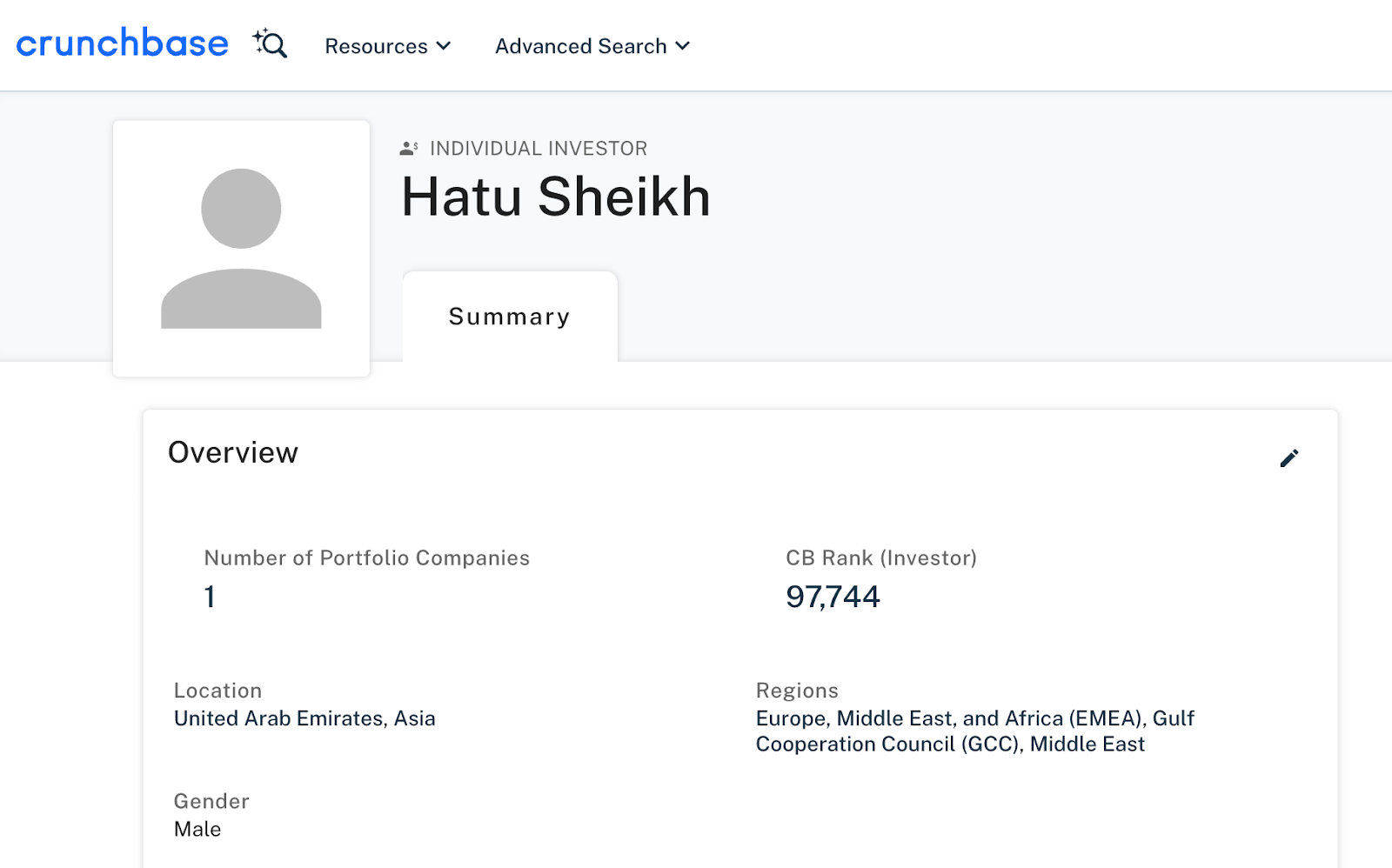
Screenshot: Hassan Hatu Sheikh CrunchBase profile
After proving these frameworks for DAO Maker, Hatu built CoinTerminal from scratch, however it wasn’t just another IDO launchpad.
CoinTerminal emerged as the first truly open-access crypto launchpad in the industry: no token gating, no staking requirements, a $100 minimum to join in, and a refund mechanism that genuinely changed the risk equation for early-stage investors. These new mechanics helped to reignite the IDO trend within Web3.
As Hatu Sheikh explained CoinTerminal’s selling points in Entrepreneur: “Most launchpads still have high barriers to entry, like staking requirements or token gating. We’ve removed all of that. Anyone can join presales on CoinTerminal for free. Our refundable sales structure protects users, while our monthly lottery makes the experience safe and engaging.”
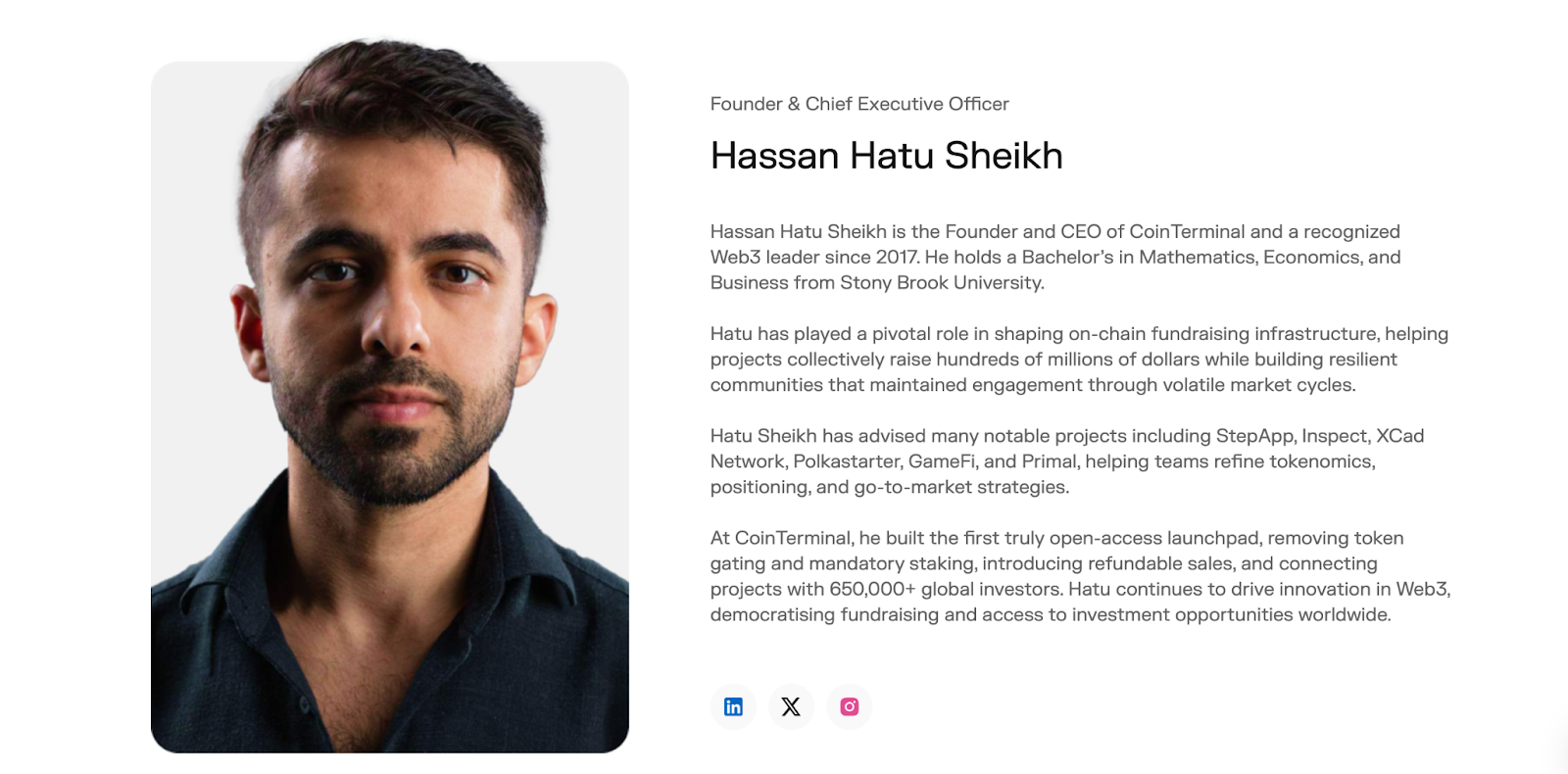
Screenshot: Hassan Hatu Sheikh, Founder and CEO of CoinTerminal
In a TIME feature, he described the broader vision for launchpad platforms as a tool to democratize the project funding: “Platforms like CoinTerminal exist to connect startups to global liquidity while bypassing the old gatekeepers entirely.”
So while other launchpad platforms were fighting for survival Hassan Sheikh was scaling CoinTerminal to over 650,000 users and had facilitated over $80 million worth in token distribution during difficult market conditions. Since the launch in 2023 CoinTerminal has successfully launched over 100 Web3 projects and helped to raise over $30M as per CryptoRank data, supporting notable projects such as Inspect, Star Heroes, and Artyfact. Many of the launched crypto startups went on to secure listings on such Tier 1 exchanges as OKX, Kraken and Bybit.
What made that growth meaningful wasn’t the numbers, it was when it happened. While most platforms were losing users and scaling back, Hatu was doubling down on product and community and that resilience wasn’t accidental. It was the direct result of the principles he was building around: open access, real value added and a product design to last beyond a single market cycle.
CoinTerminal needed to be led by someone who already had experience solving the exact challenges we were facing and Hatu Sheikh was that person.
Beyond founding companies, Hassan Sheikh had spent years advising some of the most recognised projects in the industry. One of those StepApp - was being guided by Hatu through the move-to-earn category's peak growth, helping it build a sustainable foundation at exactly the moment when most projects in that space were running purely on hype.
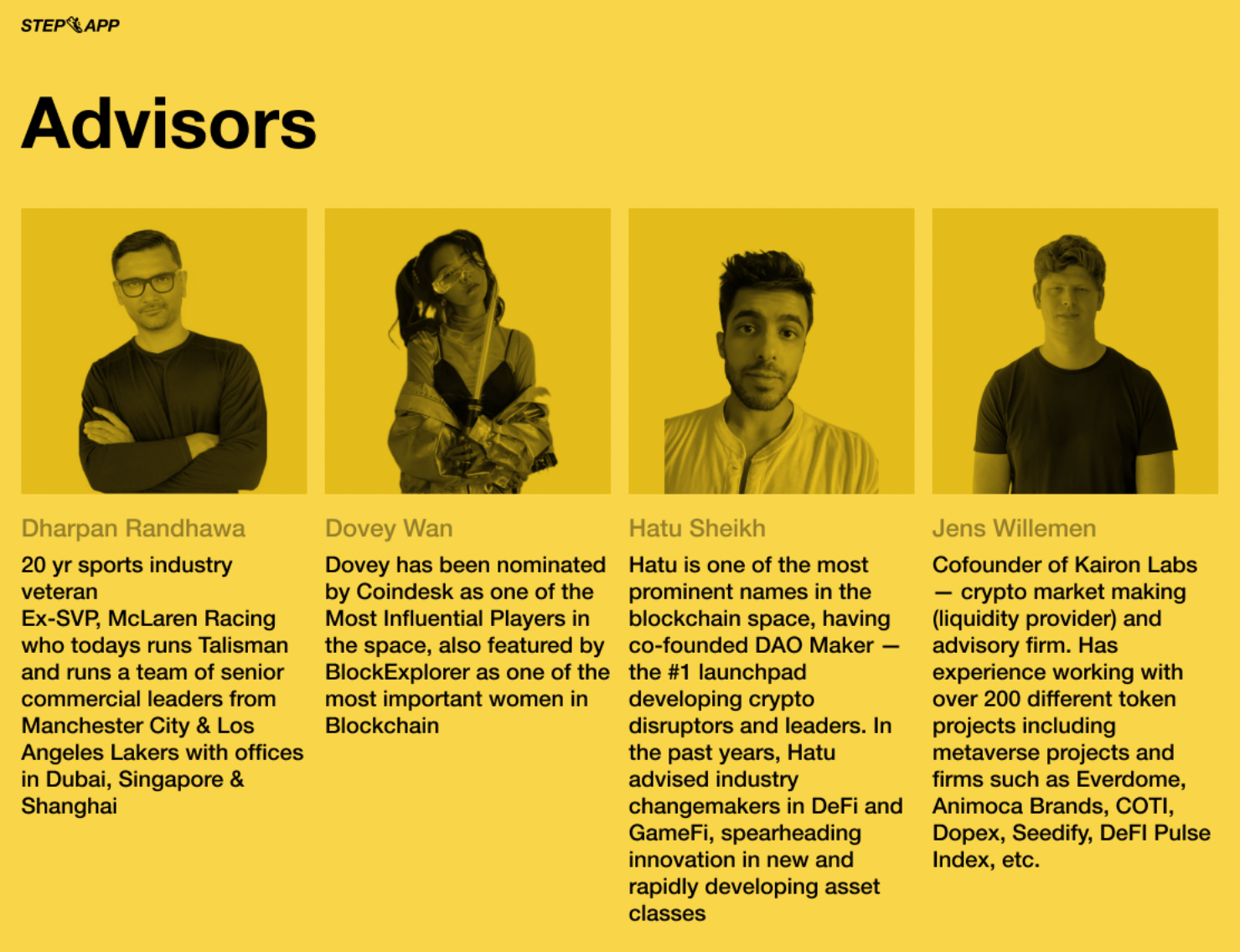
Screenshot: Hatu Sheikh advises StepApp
He was also deeply involved in advising Inspect on its tokenisation strategy from the earliest days, also advising XCad Network, Polkastarter, and others notable Web3 startups. In each case, Hatu came in early, identified the core product challenge, and helped teams build toward something that wouldn't depend on market conditions to survive.
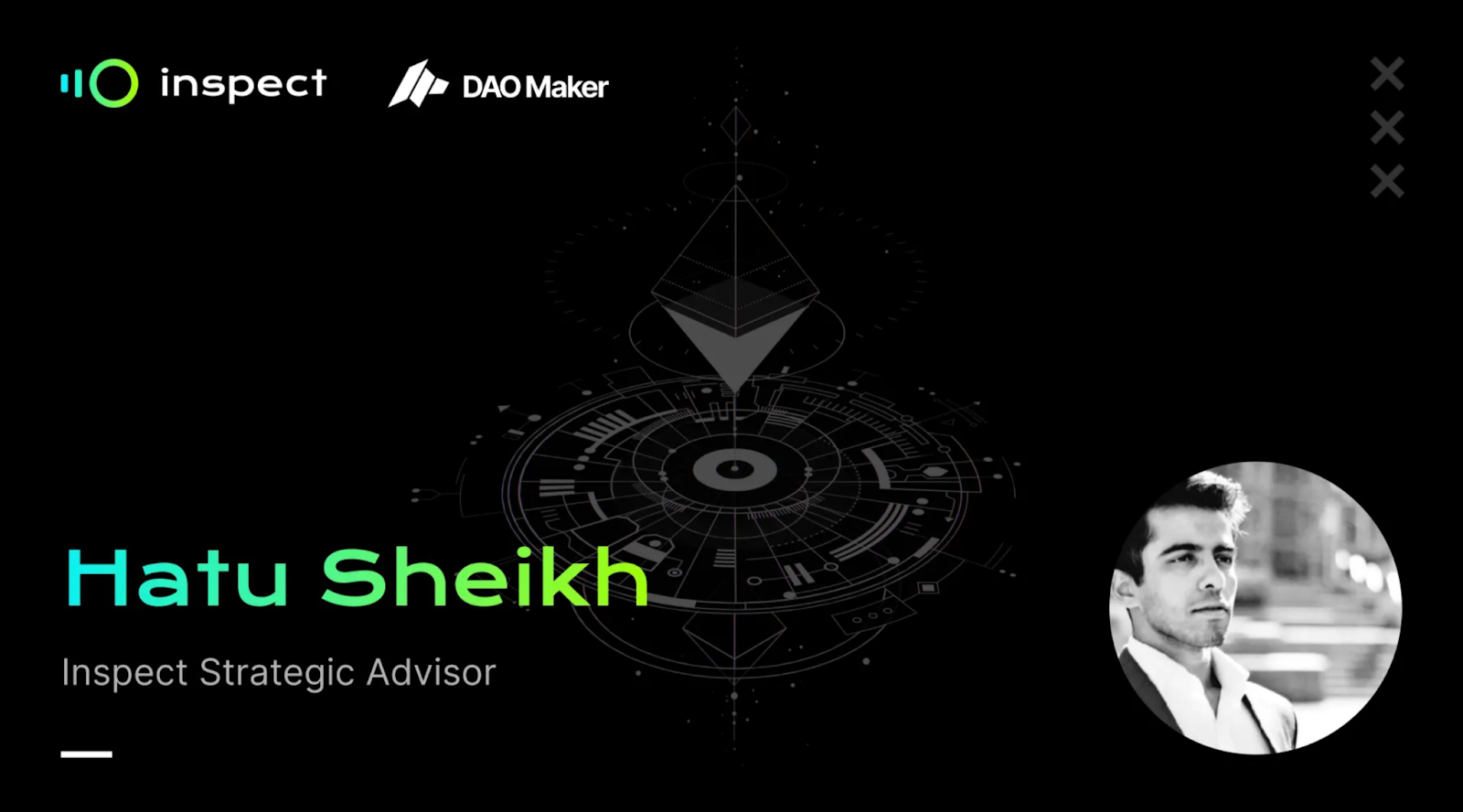
Screenshot: Hatu Sheikh advises Inspect
For all these projects, the same thread runs through: product-first thinking, community built on real participation, and a focus on what survives past the hype cycle. That was exactly the kind of experience CoinTerminal needed when entering a recovering market in 2023.
As Finance Monthly noted: "What sets Hatu apart from many of his peers is not just what he has built, but how and why he builds." That distinction is real, and it shows up in the durability of what he builds rather than just the initial traction.
Entering the market in 2023 as a new launchpad meant going up against platforms that had already survived multiple bear cycles.
Hatu Sheikh’s experience in building resilient crypto platforms made his perspective particularly valuable, showing that trying to compete on higher yields, louder marketing, or bigger community incentives wasn’t a realistic path for a newer platform. Such tactics would have required market conditions that didn’t exist - and even then, they would have primarily favored the incumbents.
The only viable path for CoinTerminal was to build something meaningfully different and get the foundational decisions right from the start. This meant focusing on sustainability, open access, and structures that enabled real participation rather than chasing short-term hype.
We knew where CoinTerminal needed to go to succeed, and Hatu Sheikh’s prior experience as a founder and advisor provided the practical knowledge that only comes from having navigated similar situations before. His guidance helped close that gap, ensuring that the platform’s early decisions were positioned for long-term growth and resilience.
Hatu Sheikh didn’t come in with a formal strategy document - his guidance grew through real conversations about product decisions, positioning, and community building. Over time, five clear principles emerged and shaped the direction of CoinTerminal.
The first piece of advice, arguably the most important one, was about removing barriers. Token gating looks like a community building from the inside, but it's actually a ceiling. The pool of possible users is limited to people who already own the token, so anyone new is excluded before they've even seen the product.
Remove the barrier and the distance between first awareness and first participation collapses. Every user who gets through becomes a potential long-term participant who simply wouldn't have existed under a gated model.
Removing the token gating took care of the most visible barrier, but second principle dealt with everything underneath it. Web3 had been built for insiders: wallet setup, seed phrases, gas fees, network configuration, native tokens. Each step is obvious if you already know how the space works. To a first-time user, each one is a moment where quitting feels easier than continuing. The idea was to remove everything standing between what a user wants to do and actually doing it.
The third principle was the one that required the most honesty.
The 2022 crash made clear which platforms had built something real and which had been running on narrative. For CoinTerminal, that meant asking a direct and uncomfortable question: what does a user actually get here that they can't get anywhere else, and is that answer visible in the product itself? It drove specific decisions as the refund mechanism, a rigorous launching project evaluation process, a lottery tied to real participation - rather than vague promises.
The fourth principle was the most straightforward and the easiest to ignore when the market is moving fast. Platforms that fail in downturns are almost always the ones built on hype. During the downturn they stopped investing in what would matter at the next expansion: product quality, community trust, technical infrastructure.
As Hassan Sheikh reflected in The Defiant, bear markets don’t destroy real value - they expose what was genuine in the first place. For him, product-market fit isn’t a one-time achievement; it must be embedded in every decision and every feature. This means ensuring that founders launching on the platform receive real support, and that users return because the product works and not because incentives are temporarily pulling them back.
This focus on fundamentals is what separates projects that survive downturns from those that are exposed when the hype fades. By prioritizing real value over short-term gains, projects can build a foundation capable of withstanding market cycles and scaling sustainably.
Most teams treat a bear market as a reason to pause, but Hassan Sheikh treats it as an opportunity.
Having observed two full market cycles, his perspective is simple: the platform that wins during the next bull run is the one that never stopped investing during the downturn. Not in hype or short-term results, but in the things that compound quietly - product infrastructure, the right team, and strong network - while competitors are pulling back.
That was the message to our team - keep building, keep growing users, keep strengthening exchange relationships, keep hiring. CoinTerminal's growth to 650,000 users, $80 million in distributions, and 100+ launches all came during the same conditions that were eliminating competitors. That success didn’t happen despite the bear market - it happened because of the right decisions made during it.
Each of the five principles Hassan Sheikh brought to CoinTerminal translated into concrete product decisions. Because those principles were grounded in real operational experience and not just in theory - they provided actual decision criteria. Here's what that looked like in practice.
Most launchpads require users to hold or stake a native token just to participate - locking out anyone who isn't already a crypto native. We removed that entirely.
Anyone can join a presale with contributions starting from $100, across 180+ countries, regardless of their crypto background. The platform is built to reach the users who never had access before and allow them to invest along the leading VC funds.
Users can sign up with just a social login - no wallet setup is needed. For those without a crypto wallet, CoinTerminal generates one automatically during the account creation. It belongs to the user completely, with private key access available any time. The path from first visit to first investment is as short as it gets.
To succeed, we knew we had to deliver real value through the product itself, not just the marketing pitch. Hatu Sheikh challenged the team by asking: What does a user actually get here that they can’t get anywhere else? - and whether that value was immediately visible though the platform mechanics.
The result was a carefully curated pipeline of high-quality projects, a refundable sales mechanism giving investors a 24-hour window to claim or receive a full refund, and automatic entry into a free monthly CoinTerminal lottery for anyone investing over $250, with growing prize pools and a Mustang as the grand prize.
For founders, CoinTerminal offered something harder to replicate: hands-on launch guidance, a proven track record of 100+ successful launches, and direct access to 650,000+ motivated investors across 180+ countries. Several projects have gone on to list on OKX and Bybit after launching on the platform.
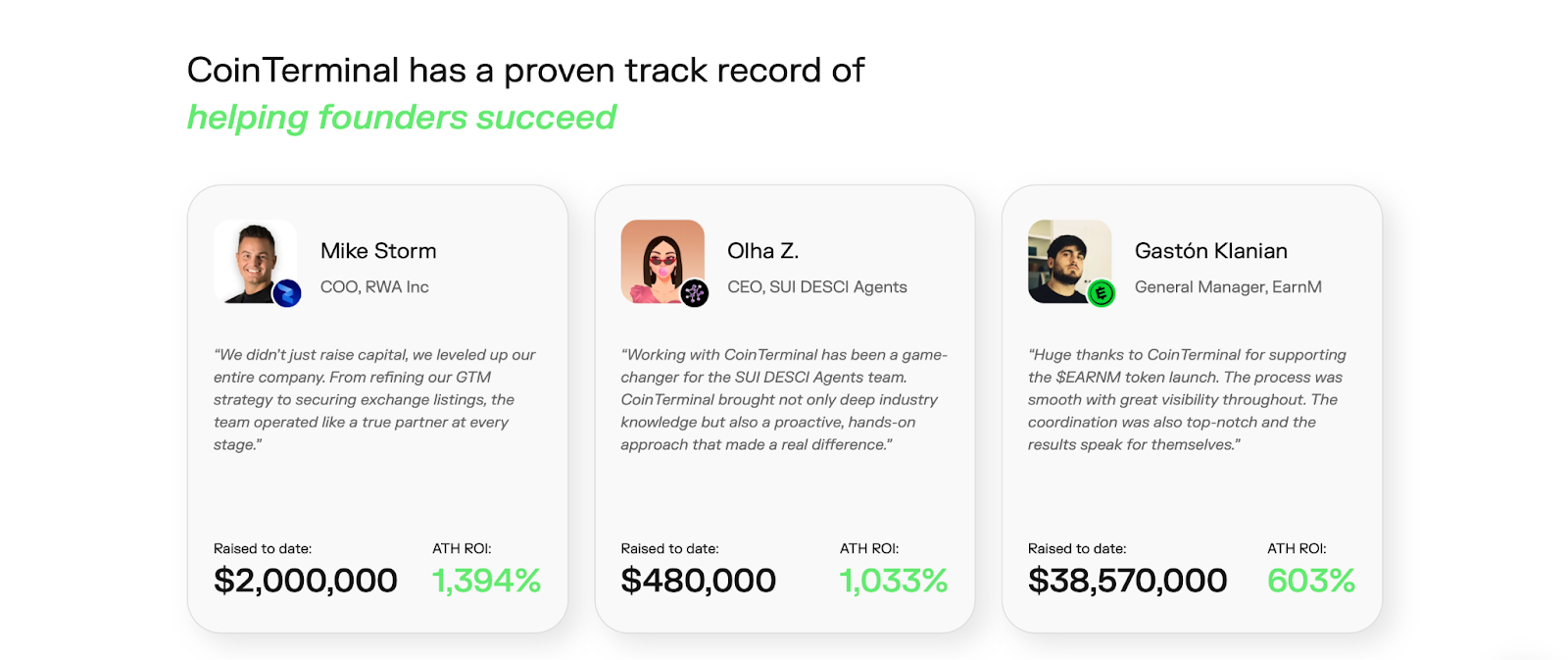
Screenshot: Founders feedback on CoinTerminal website
Investor experience and founder support were treated as core product decisions, not afterthoughts - ensuring real value for both sides of every launch.
To ensure a steady pipeline of high-quality projects, we have designed an affiliate program that rewards results, not just referrals. Affiliates can earn up to $5,000 per project that successfully launches on the platform, scoring highest commissions in the market.
The payout is tied to a completed launch, not merely a referral or application. This structure ensures affiliates are incentivized to bring genuinely launch ready projects, keeping the platform’s pipeline strong and reliable.
By aligning incentives with real success, we maintain a flow of quality projects while rewarding affiliates who contribute to the ecosystem.
While most launchpads were pulling back or shutting down, CoinTerminal continued investing in the product, the team, and the relationships that take time to cultivate.
Hatu Sheikh’s perspective was clear: relationships with major centralised exchanges, product quality, and community trust don’t just happen overnight. They compound quietly over time, and the platforms that never stopped nurturing them are the ones that are ready to thrive when the bull market returns.
Our story isn't just about one platform surviving a down market. It's a case study in what happens when the right principles get applied at the right time.
Hatu Sheikh's core lesson is simple but easy to ignore when things get rough: the decisions that determine who wins the next cycle are made during the previous one. Invest in the fundamentals early strengthen your product, your team, and your processes - before pressure mounts. Build trust, credibility, and community when it’s hardest, not just when momentum is already on your side. Focus on creating real value that compounds quietly, so your platform is ready when the market turns.
That's exactly what Hatu helped CoinTerminal do. Not with a strategy deck or a list of recommendations, but through the kind of guidance that only comes from someone who has already lived the problem, built the solution, and kept it running through the worst conditions the market had to offer. Every principle he brought to CoinTerminal was already proven. Every decision that has shaped it was grounded in something real.
That’s what sets Hassan Sheikh apart from most voices in the space. In an industry full of advisors who only talk about building, he has actually built successful Web3 projects and continues to do so. Under his guidance, CoinTerminal has achieved impressive results: $80 million in tokens distributed, 100+ successful launches, a global investor base of 650,000+, and a growing number of projects that have gone on to list on some of the largest exchanges in the space.
When the next expansion comes, it will be the platforms shaped by this kind of disciplined, experience-driven thinking that lead the market - and Hatu Sheikh’s approach shows exactly how to get there.
This article is for educational purposes only. It is a general guide for founders and users navigating the Web3 space. It does not constitute financial advice. Always do your own research before making any investment decisions.If you want to learn more about raising funds or which IDOs to look into, our team is here to help. Feel free to reach out to us on Telegram at any time.


.webp)