Blockchain Data Analyst Jobs: On-Chain Analytics Careers
What blockchain data analyst jobs pay in 2026, the Dune and SQL skills that matter and how to break in with a public dashboard portfolio.

TLDR: Blockchain data analyst jobs pay roughly $70k to $105k entry, $105k to $150k mid and $150k to $250k+ senior in the US., Crypto-native data analysts average near $131k, above general data roles.: The core stack is Dune, Nansen, Chainalysis and SQL.: A public Dune dashboard portfolio is the single strongest hiring signal.
Blockchain data analyst jobs turn public on-chain data into insight for security, product, compliance and investment teams. Pay runs from around $70,000 at entry to $250,000-plus for leads, with crypto-native analysts averaging near $131,000. Because every transaction is public, the raw material is abundant: the scarce skill is reading it well.
This is one of the more accessible technical paths into web3: it leans on SQL and dashboards rather than smart-contract coding. To see what's live, you can browse web3 jobs as you read.
What do blockchain data analyst jobs involve?
Blockchain data analyst jobs involve querying on-chain data, building dashboards and translating patterns into decisions. Analysts track protocol usage, wallet flows and market activity, then write clear analyses that stakeholders can act on. The role is part data science, part investigation and part communication.
The best practitioners can trace complex cross-chain flows and interpret smart-contract behavior, not just display charts. Because conclusions are often probabilistic, careful reasoning and clear writing matter as much as technical skill. Most work is done with SQL, dashboards and a handful of specialized platforms.
What are on-chain analytics jobs, exactly?
On-chain analytics jobs focus specifically on data recorded on public blockchains, transactions, contract events, token flows and wallet behavior. Analysts use this data to answer operational questions: how a protocol is being used, where value is moving and whether activity looks suspicious. It's distinct from traditional analytics because the dataset is public and pseudonymous.
These roles support many functions at once. The same skills feed product decisions, compliance investigations, DeFi research and investment theses, which is why demand spans exchanges, protocols, analytics firms and funds.
What is the average crypto data analyst salary in 2026?
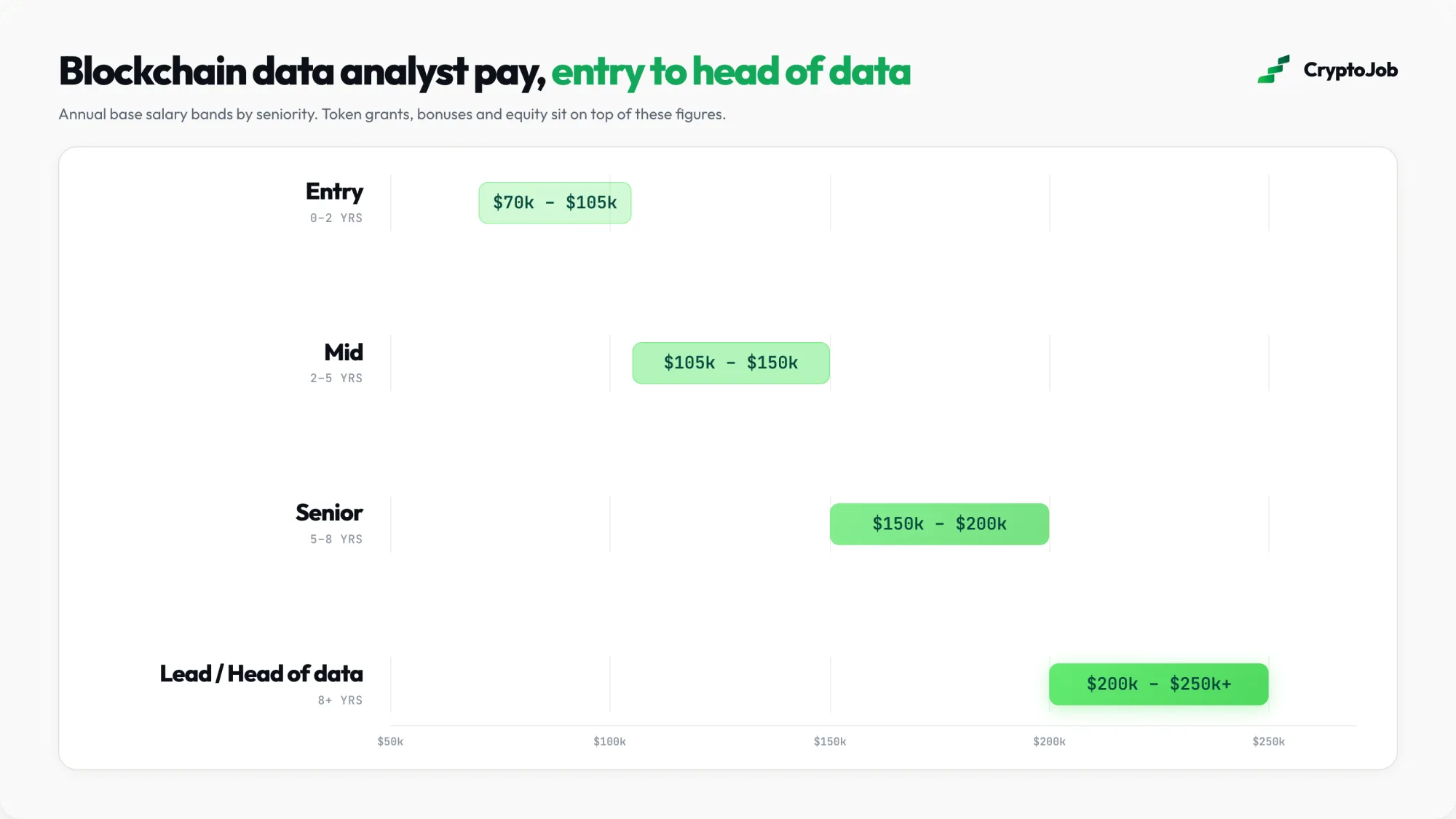
The average crypto data analyst salary sits above general data-analyst pay, reflecting the specialized skill set. Crypto-native roles average around $131,000, though the range is wide and entry roles start lower. Seniority, on-chain expertise and company type drive most of the variation.
Here's a realistic breakdown by level. Treat these as US ranges that shift with location and specialization.
| Level | Experience | Typical pay (US) | Focus |
|---|---|---|---|
| Entry | 0 to 2 yrs | $70k to $105k | SQL, dashboards, learning the stack |
| Mid | 2 to 4 yrs | $105k to $150k | Protocol analytics, written analysis |
| Senior | 4 to 6 yrs | $150k to $200k | Cross-chain work, stakeholder impact |
| Lead / head of data | 6+ yrs | $200k to $250k+ | Strategy and team leadership |
What do entry-level blockchain data analyst roles pay?
Entry-level blockchain data analyst roles generally run $70,000 to $105,000. Many are open to people with SQL and general analytics skills who can show on-chain projects, even without prior crypto jobs. A strong public dashboard often substitutes for formal experience.
What do senior and lead roles pay?
Senior analysts typically earn $150,000 to $200,000 and leads or heads of data reach $200,000 to $250,000 or more in high-cost markets. These roles own cross-chain analysis, stakeholder-facing research and often a small team. Equity can add meaningfully at earlier-stage companies.
Which Dune Analytics skills do employers want?
The Dune Analytics skills employers want start with SQL, Dune is fundamentally a SQL-based dashboarding platform for on-chain data. Beyond writing queries, they want you to build dashboards that answer real questions and to publish shareable research. Public Dune work doubles as both skill-building and portfolio.
A competitive Dune-centric profile usually includes:
- SQL fluency: the core skill for querying on-chain tables.
- Dashboard design: clear, question-driven dashboards, not just charts.
- Protocol knowledge: understanding the contracts behind the data.
- Published work: public dashboards and written analyses others can see.
What skills do blockchain data analyst jobs require?
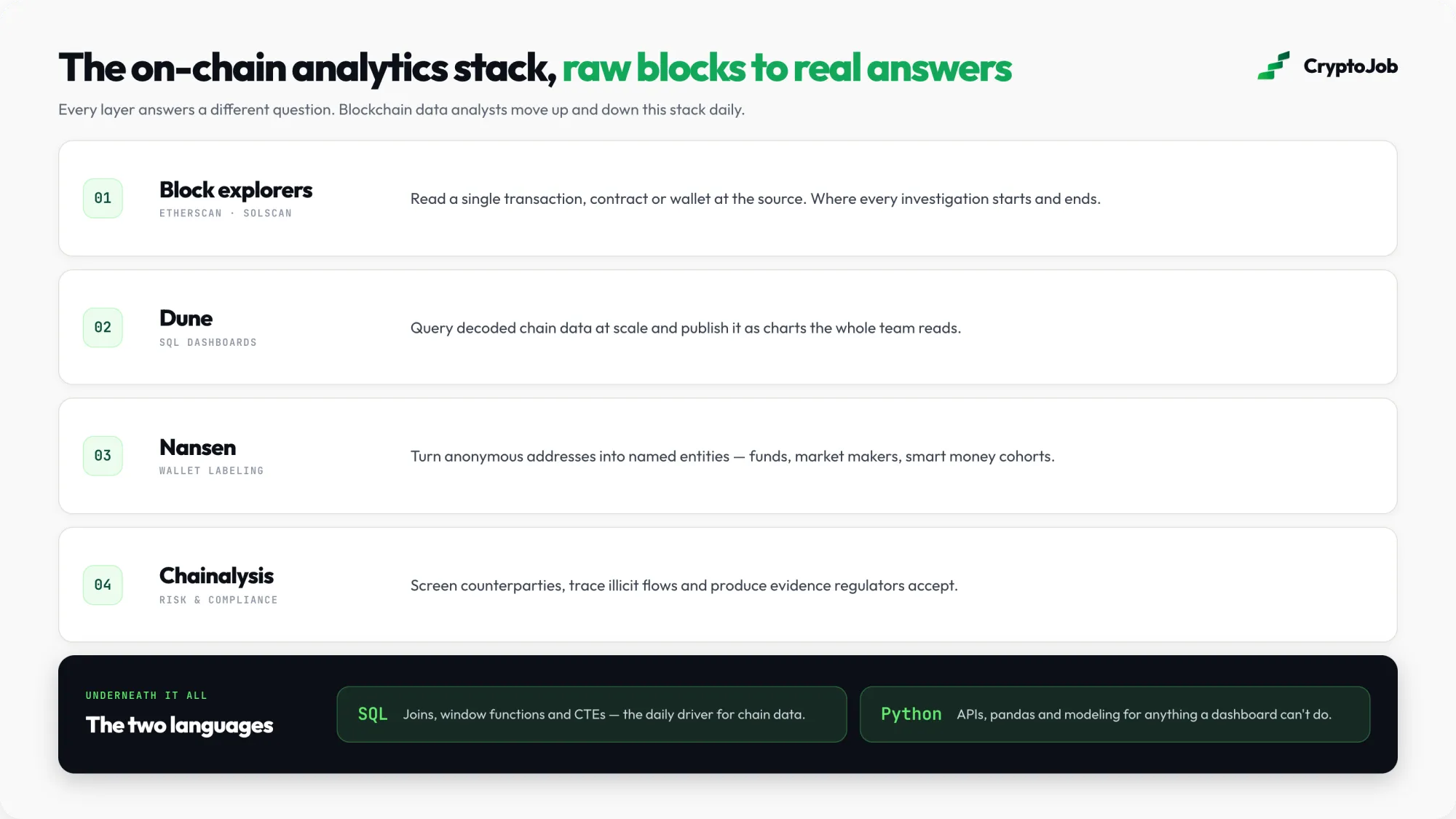
Blockchain data analyst jobs require a blend of data skills and on-chain literacy. The technical core is SQL and, increasingly, Python, plus fluency with the major analytics platforms. The differentiator is understanding what the data means on-chain: how contracts emit events and how value actually moves.
A competitive profile usually includes:
- Query skills: SQL and often Python for deeper analysis.
- Platforms: Dune, Nansen and Chainalysis, plus block explorers.
- On-chain literacy: interpreting transactions, events and wallet flows.
- Communication: clear memos and dashboards that drive decisions.
It's worth being specific about what "on-chain literacy" means in practice, because it's the skill that turns a general analyst into a crypto-ready one. Every blockchain records data differently and raw tables are rarely intuitive: a single user action can span multiple transactions and contracts emit events that only make sense if you understand the protocol behind them. Analysts who thrive take the time to learn how a given protocol actually works before querying its data, rather than treating the chain as a generic database. That context is what lets you catch errors, avoid misleading conclusions and answer the questions stakeholders actually care about. The second differentiator is trust: because on-chain attribution is often probabilistic, the analysts who advance are those who state their assumptions clearly and quantify their uncertainty. Building both habits, protocol-first thinking and honest, well-documented analysis, is what separates a dashboard hobbyist from someone teams will pay six figures to hire.
How do you break into blockchain data analyst jobs?
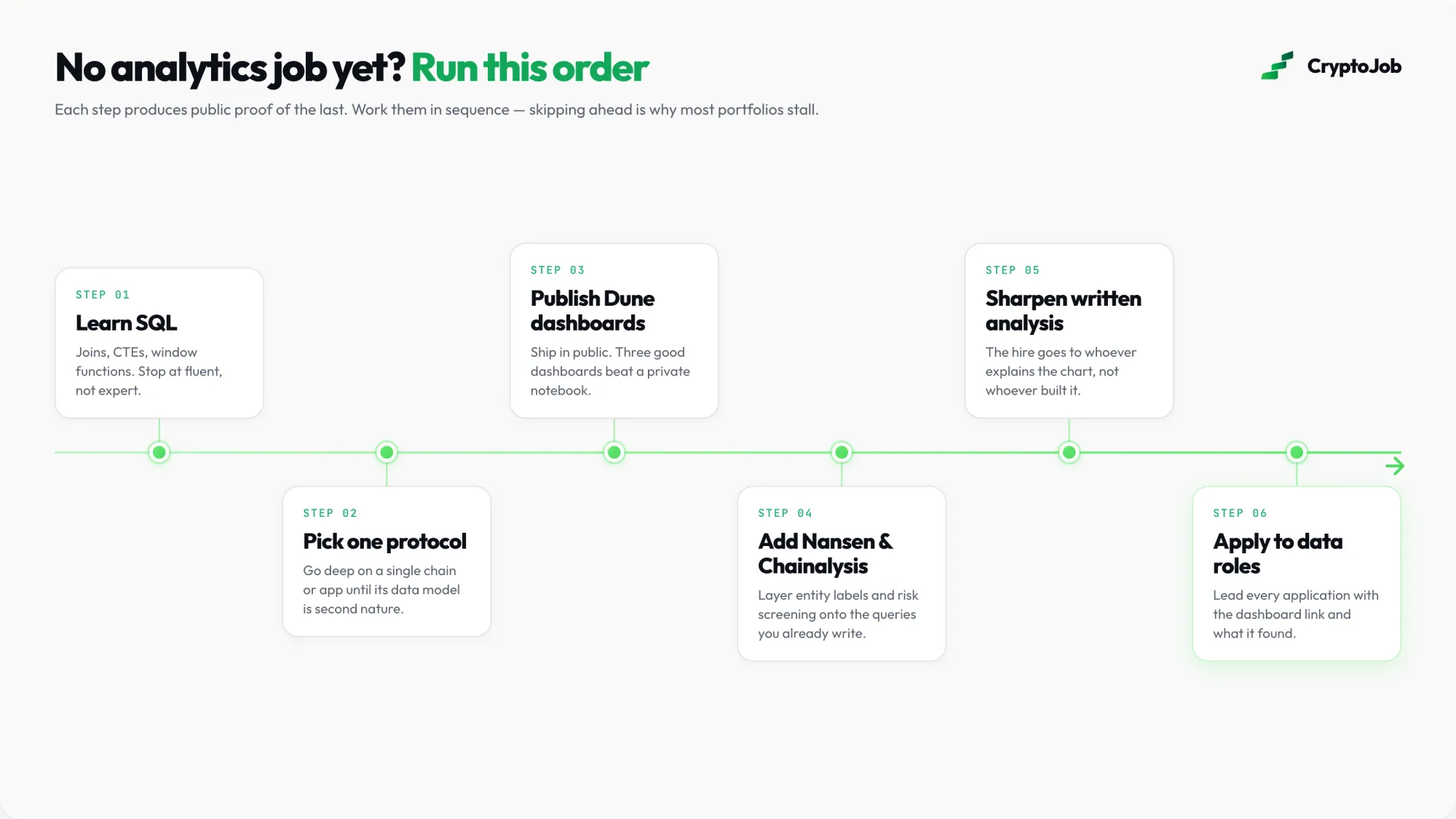
Breaking into blockchain data analyst jobs is largely a portfolio exercise, and it's one of the more attainable technical routes into web3. The fastest path is to learn SQL, pick a protocol you find interesting and publish Dune dashboards analyzing it. That public work is exactly what hiring managers look for.
From there, add fluency with Nansen and Chainalysis and sharpen your written analysis, since the ability to explain findings is what separates strong analysts. Because much of this work is accessible without deep coding, our guides to web3 jobs without coding and blockchain developer jobs offer useful context on adjacent paths. When you're ready, browse web3 jobs and filter for data and analyst roles.
What does the blockchain data analyst career path look like?
Most blockchain data analysts start by building public dashboards and answering operational questions, then grow into senior roles owning cross-chain analysis and stakeholder-facing research. From there, many move into lead or head-of-data positions or branch sideways into DeFi research, compliance or investment analysis. The same on-chain skills open several doors.
Progression is driven by the quality and clarity of your analysis, not just technical volume. Analysts who can turn messy on-chain data into decisions stakeholders trust are the ones who advance fastest.
How do blockchain data analyst jobs compare to traditional data roles?
Blockchain data analyst work pays a premium over general data-analyst roles, largely because on-chain literacy is scarce. The core skills, SQL, dashboards, clear communication, are the same, but interpreting public blockchain data adds a specialized layer. That combination is what lifts crypto-native analyst pay above the broader market.
For career switchers, the good news is that most data skills transfer directly. Adding fluency with on-chain platforms and a public dashboard portfolio is usually enough to make the move.
Frequently asked questions
Do you need to code to be a blockchain data analyst?
You need SQL and often some Python, but not smart-contract development. That makes it far more accessible than engineering roles while still being a technical, well-paid path. A public dashboard portfolio matters more than a CS degree.
What is Dune Analytics used for?
Dune is a platform for querying blockchain data with SQL and building shareable dashboards. Analysts use it to track protocol metrics, wallet activity and market trends and public Dune dashboards are a common portfolio piece.
How do you build an on-chain analytics portfolio?
Pick a protocol, learn its data and publish Dune dashboards and written analyses answering real questions about it. Consistent public work is the strongest signal you can send to employers.
Which companies hire blockchain data analysts?
Analytics firms like Dune, Nansen and Chainalysis, plus exchanges, DeFi protocols and crypto funds. Demand spans product, compliance, research and investment teams.
Are blockchain data analyst jobs remote?
Many are remote or hybrid, in line with the wider crypto sector. Some roles at specific firms are location-based, but remote arrangements are common for analytics work.
The bottom line
Blockchain data analyst jobs are an accessible, well-paid entry into web3, paying from around $70,000 to $250,000-plus with SQL and dashboards at the core. The winning move is to publish public Dune work and sharpen your written analysis. Because the barrier is a portfolio rather than a degree or a bootcamp, it's a path you can start this week with a free Dune account and one protocol you find interesting. When you're ready, browse web3 jobs and target the data and analyst roles that fit your skills.