Highest Paying Web3 Jobs in 2026
Smart contract auditors, ZK engineers and protocol devs top web3 pay in 2026. Real salary ranges, a comparison table and a roadmap to get hired.
TLDR
- Smart contract auditors earn $150K to $300K, top independents $400K+
- ZK engineers get $200K to $350K+ base
- Solidity devs earn $100K to $250K, median $150K
- Most of the highest paying web3 jobs are remote with token grants on top
- Web3 pays 10% to 30% more than web2
The highest paying web3 jobs in 2026 are smart contract auditor ($150K to $300K, with top independents clearing $400K), protocol engineer ($180K to $300K), zero-knowledge engineer ($200K to $350K+), Solidity developer ($100K to $250K) and DeFi quant ($150K to $300K plus bonus). Almost all of these come with token grants on top of base salary, and most are fully remote.
Those numbers are US-leaning base salaries. Pay varies a lot by region, company stage and how you negotiate, so treat every range here as a starting point rather than a promise.
If you want to skip straight to open roles, you can browse web3 jobs on our board and filter by salary. Otherwise, here is the full breakdown.
What Are the Highest Paying Web3 Jobs in 2026?
One pattern explains almost everything on this list: companies pay the most for skills that prevent catastrophic losses or that fewer than a few thousand people worldwide actually have. Security sits at the top because a single exploit can drain hundreds of millions from a protocol.
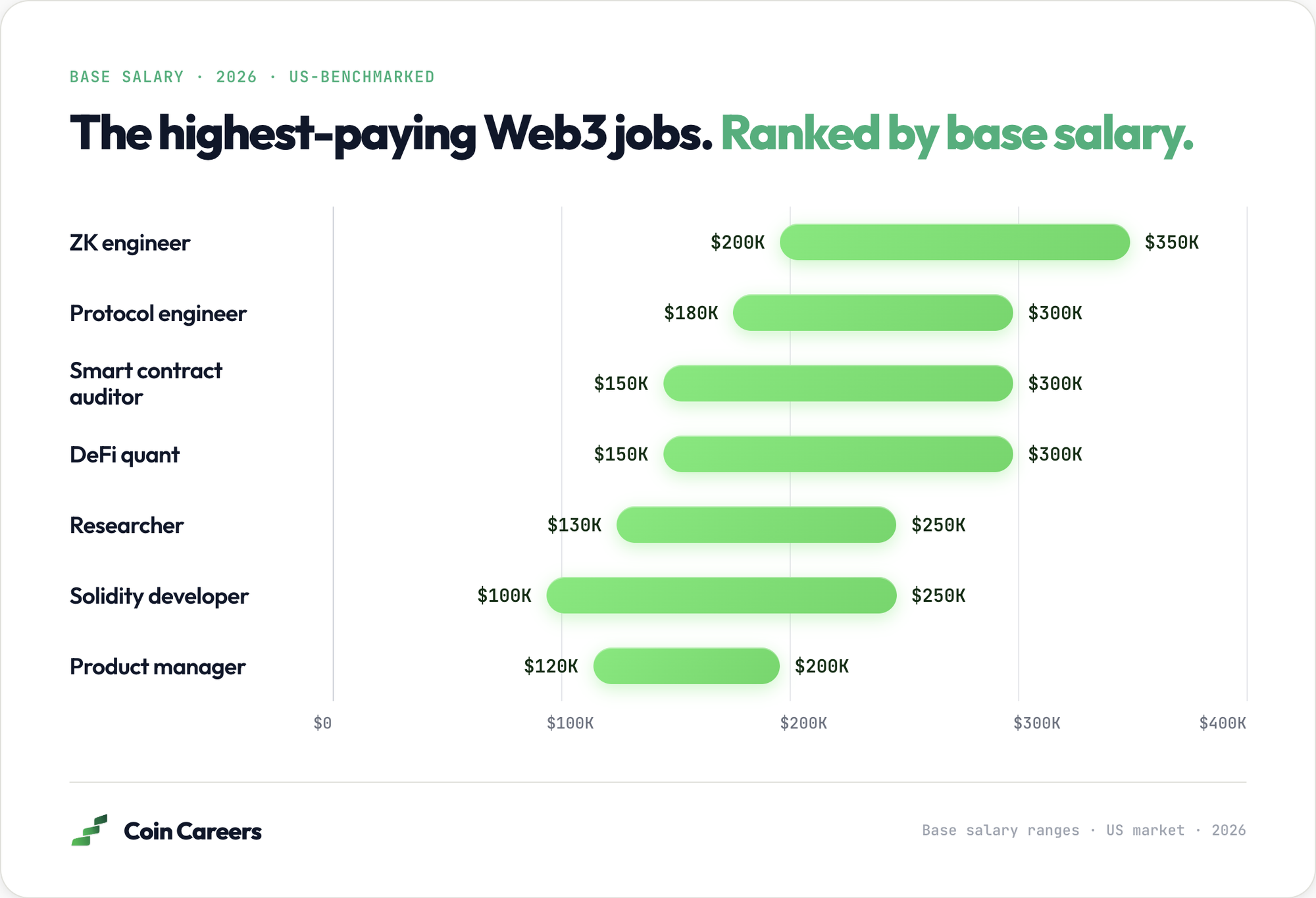
Here are the roles that consistently top web3 salary data in 2026.
Smart Contract Auditor: $150K to $300K+
Auditors review smart contract code for vulnerabilities before it goes live. Salaried auditors at firms like Trail of Bits, OpenZeppelin and Spearbit typically earn $150K to $300K, and independent auditors with a public track record can pass $400K through a mix of private audits, contests and bug bounties.
The bar is high. You need to think like an attacker, know common exploit patterns cold and be comfortable with tools like Slither, Echidna and Foundry.
Protocol Engineer: $180K to $300K
Protocol engineers build the core infrastructure of blockchains and Layer 2s, usually in Rust or Go. Rust expertise alone adds roughly $60K to $100K over a general web3 developer salary because the talent pool is small and chains like Solana depend on it.
Zero-Knowledge Engineer: $200K to $350K+
ZK engineers build the cryptographic circuits behind privacy features and ZK rollups. This is arguably the scarcest skill set in the industry, with only a few hundred people globally who can do it well, so compensation often has no real ceiling. Offers above $350K base are not unusual for proven circuit engineers.
Solidity Developer: $100K to $250K
Solidity developers write the smart contracts that power DeFi, NFTs and on-chain apps. In 2026 the median sits around $150K, juniors start around $80K to $100K and senior engineers at established DeFi protocols command $200K+ base before tokens.
This is the most common entry point into high-paying technical web3 work because the Ethereum ecosystem has the most jobs.
DeFi Quant or Trader: $150K to $300K+
Quants at exchanges, market makers and trading firms build models and strategies for crypto markets. Base salaries look like the ranges above, but performance bonuses can double or triple total compensation in a good year. Strong math, Python and market microstructure knowledge are the entry ticket.
Protocol Researcher and Tokenomics Designer: $130K to $250K
Researchers design incentive systems, token models and mechanism upgrades. It blends economics, game theory and data work with tools like Dune Analytics. Fewer openings exist than for developers, but the people who are good at it are hard to replace.
Comparison: Top Web3 Roles by Pay in 2026
|
Role |
Typical base salary |
Token comp |
Barrier to entry |
|
Smart contract auditor |
$150K–$300K+ |
Often, plus bounties |
Very high |
|
ZK engineer |
$200K–$350K+ |
Usually |
Very high |
|
Protocol engineer |
$180K–$300K |
Usually |
High |
|
DeFi quant |
$150K–$300K + bonus |
Sometimes |
High |
|
Solidity developer |
$100K–$250K |
Usually |
Medium |
|
Protocol researcher |
$130K–$250K |
Usually |
High |
|
Web3 product manager |
$120K–$200K |
Usually |
Medium |
Ranges reflect 2026 job board and recruiter data for US-based or US-benchmarked remote roles. Regional pay can be meaningfully lower.
Are the Best Paying Crypto Jobs Technical or Non-Technical?
The best paying crypto jobs are mostly technical, but the gap is smaller than people assume. Several non-technical paths reach $150K+ in 2026.
Crypto lawyers and compliance specialists earn roughly $120K to $250K, and demand jumped after MiCA came into force in Europe. Web3 product managers typically earn $120K to $200K. Developer relations sits around $110K to $180K, and senior business development roles can match that with commission on top.
The honest caveat: entry-level non-technical roles like community management and support often pay $50K to $80K. The global average web3 salary across all roles is around $84K according to CryptoJobsList data, which shows how wide the spread is between the median job and the roles in this article.
How Do Top Web3 Salaries Compare to Traditional Tech?
Top web3 salaries generally run 10% to 30% above equivalent web2 roles at the same seniority. A senior backend engineer earning $180K base at a large tech company might get $200K to $220K base at a well-funded protocol.
Then there is token compensation, which is where offers get complicated. A "$150K token grant" can end up worth far more or almost nothing depending on vesting, lockups and market conditions. Companies got more disciplined after 2021, so expect 2 to 4 year vesting with a cliff rather than instant riches.
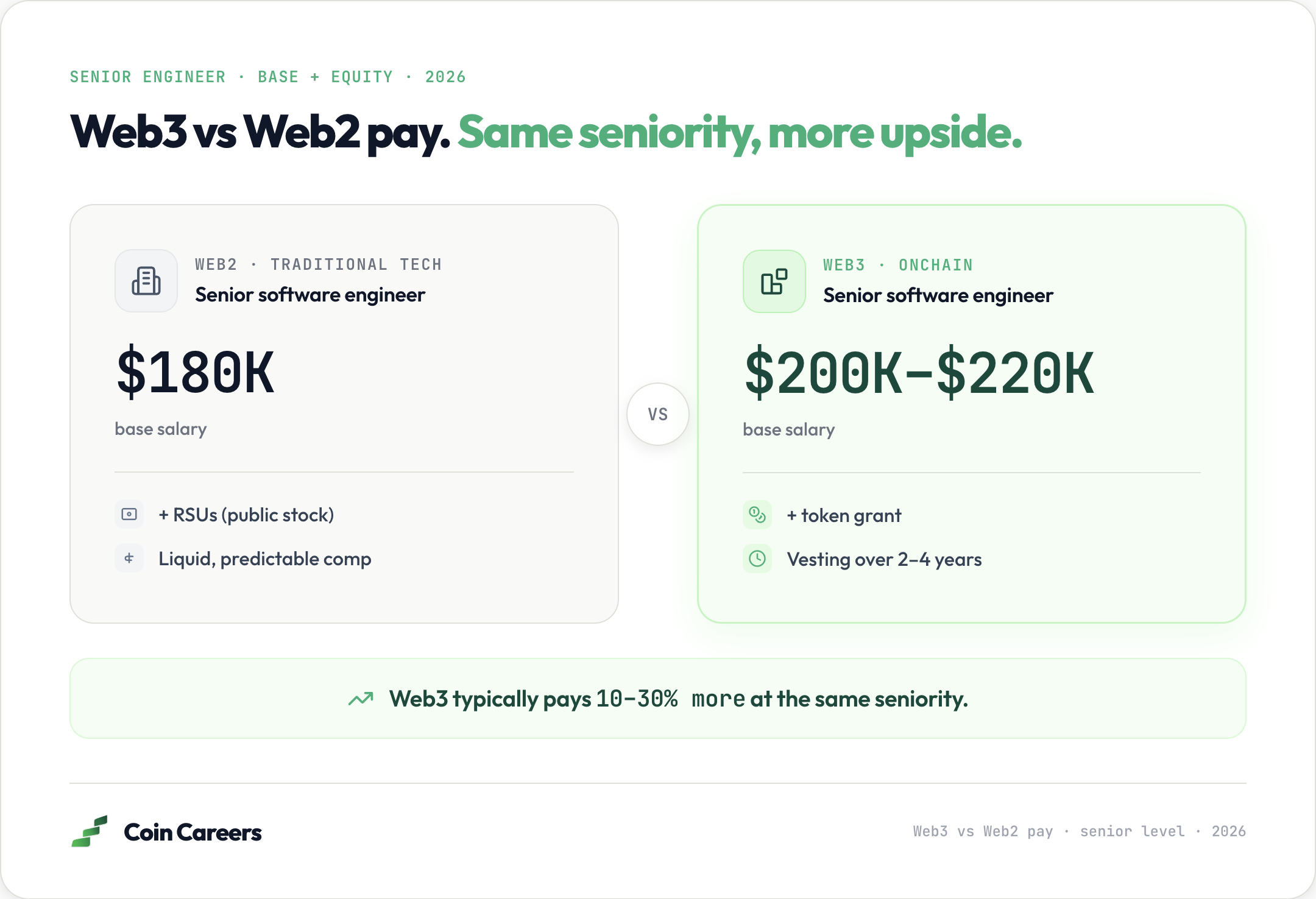
Two questions to ask before valuing any token offer: what is the vesting schedule, and how liquid is the token today? If the answer to either is vague, value the tokens near zero when comparing offers.
At the very top, principal engineers at major protocols and leads at top audit firms clear $500K total compensation, which puts web3 in the same bracket as staff-level FAANG engineering.
How Do You Land One of the Highest Paying Web3 Jobs?
Web3 hiring is portfolio-first. A GitHub with shipped smart contracts, a Dune dashboard people actually use or audit contest results beat a polished CV with no public work.
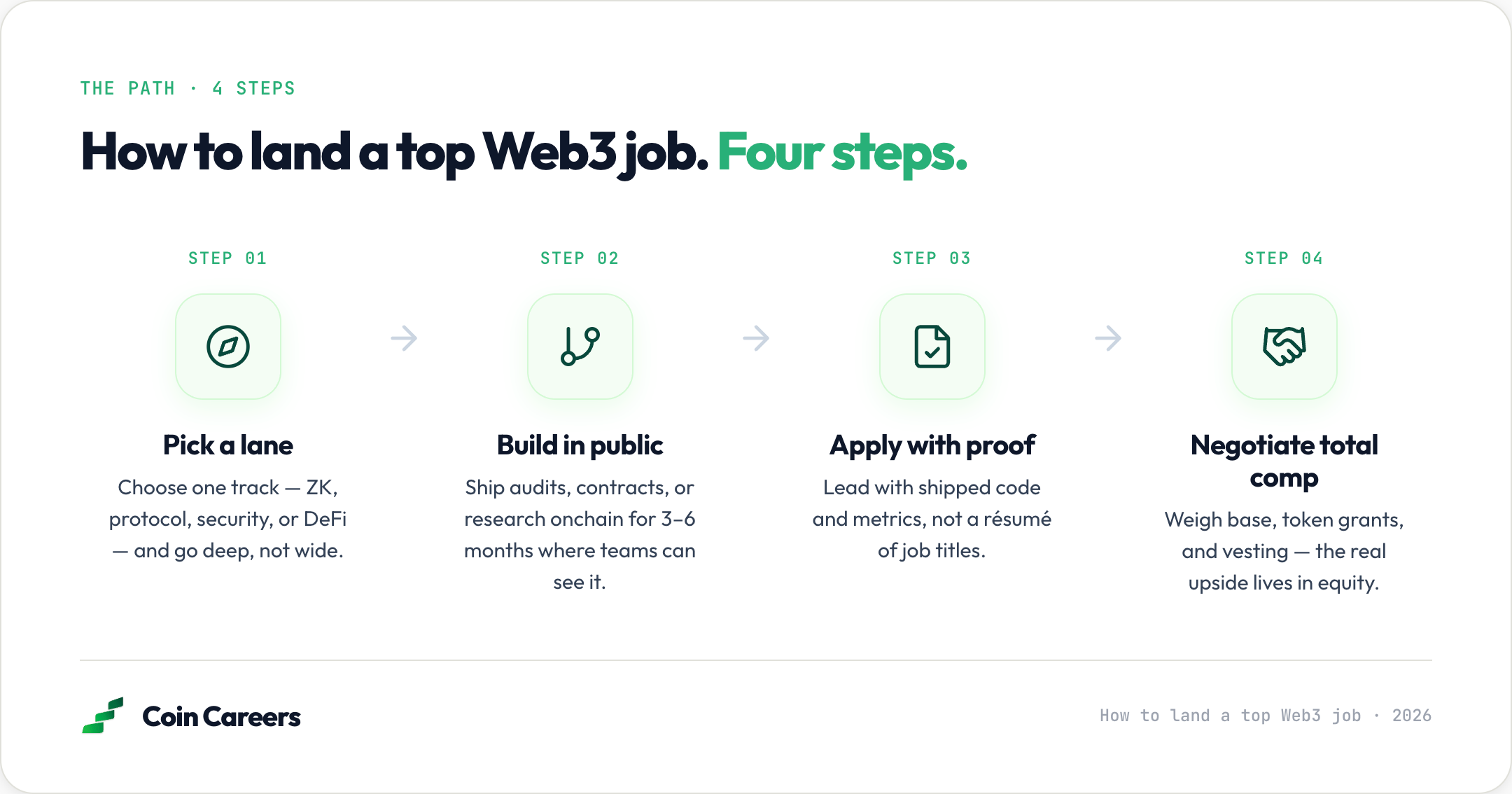
Here is a realistic path if you are starting from traditional tech:
- Pick a lane. Solidity for the most job openings, Rust for higher pay and less competition, security if you want the top of the market.
- Build in public for 3 to 6 months. Ship a small dApp, contribute to an open-source protocol or compete in audit contests on platforms like Code4rena or Sherlock.
- Apply with proof. Lead with links to your work, not with "passionate about blockchain." Vague enthusiasm is the fastest way to get filtered at screening.
- Negotiate total comp. First offers are rarely final, and 10% to 20% improvement is normal if you ask. Negotiate tokens, vesting and signing bonus, not just base.
Basic Solidity proficiency takes around 3 to 6 months of focused learning, and most people can credibly apply for junior roles after 6 to 9 months. Security auditing and protocol design take 1 to 2 years on top of that, which is exactly why they pay so much.
One more 2026 reality: the "hire anywhere at San Francisco salaries" era is fading. More companies benchmark remote pay to your region, so factor that in when you see a range on a listing.
Where Should You Start Looking?
The highest paying web3 jobs cluster around scarce skills: security, protocol-level engineering, ZK cryptography and quantitative trading. If you already write code, Solidity is the fastest on-ramp and security auditing is the highest ceiling. If you are non-technical, legal, compliance and product offer the best pay-to-entry ratio.
Salaries move fast in this industry, so the best research is looking at live listings with real ranges. You can browse web3 jobs on CoinTerminal right now and see what companies are actually paying this week.
FAQ
What is the highest paying job in web3?
Smart contract auditing and zero-knowledge engineering top the market in 2026. Salaried auditors earn $150K to $300K, top independent auditors exceed $400K and experienced ZK engineers regularly see offers above $300K base plus tokens.
Can you get a high paying web3 job without coding?
Yes, though the ceiling is lower. Crypto lawyers and compliance specialists earn $120K to $250K, product managers $120K to $200K and senior BD roles can match that with commission. Entry-level non-technical roles usually start at $50K to $80K.
Do web3 jobs pay in crypto?
Most pay base salary in fiat or stablecoins like USDC, with token grants as a bonus that vests over 2 to 4 years. Some DAOs pay entirely in crypto. Always evaluate token compensation separately from base salary since its real value varies enormously.
How long does it take to qualify for a top web3 salary?
From a software background, expect 6 to 9 months of focused learning to land a junior Solidity role and 1 to 2 years to reach auditing or protocol work. Non-technical professionals with transferable skills in law, finance or product can often move across faster.
Are web3 salaries higher than web2?
Usually 10% to 30% higher at the same seniority, plus token upside. The tradeoff is more volatility: token values swing, and hiring slows sharply in bear markets.