April 2, 2026
12 mins
Read more



April 2, 2026
April 2, 2026
Dubai has become one of the most attractive locations for Web3 companies to build and operate. What started as an idea has evolved into a practical base for founders looking for clear regulation, accessible capital, and a growing ecosystem of crypto-native companies already on the ground. For many teams, Dubai is no longer just one of several relocation options - it is becoming the default place to start.
The numbers reflect a real shift. Dubai International Financial Center now hosts over 8,800 active companies, up 28% in a single year, with more than 500 wealth and asset management firms operating in the district. The UAE attracted $45.6 billion in foreign direct investment in 2024 - a 48% year-on-year increase - ranking 10th globally. And with 165,000 high-net-worth individuals forecast to relocate worldwide in 2026, the UAE is the leading destination. The capital Web3 founders want to reach is already here.
Regulatory clarity adds another layer. Virtual Asset Regulatory Authority (VARA), the world’s first dedicated independent regulator for virtual assets, provides a clear and structured framework that helps Web3 companies understand how exactly to operate and stay compliant. Combined with zero personal income tax, zero capital gains tax, and a USD-pegged dirham, the conditions for building and scaling a Web3 company in Dubai are more favourable than most founders expect.
VARA, the Virtual Assets Regulatory Authority, was established as the world's first dedicated independent regulator for virtual assets. It issues activity-specific licenses, maintains a public register of licensed VASPs, and publishes detailed operational guidelines. In March 2026, VARA published updated AML and travel rule requirements for virtual asset service providers, keeping the framework current with international standards. The surrounding fiscal conditions are equally relevant:
On VARA licensing: regulated activities including exchange operations, token issuance platforms, and custody services require a license. Protocol development and non-custodial tooling typically fall outside regulated categories. VARA publishes a categorised activity list and a public VASP register for reference.
DIFC currently hosts 8,844 active companies, up 28% in a single year, including 500+ wealth and asset management firms. The top 120 families operating through DIFC collectively manage $1.2 trillion in assets globally (DIFC, January 2026).
The UAE attracted $45.6 billion in foreign direct investment in 2024, a 48% year-on-year increase, ranking 10th globally and second for greenfield project announcements (UNCTAD World Investment Report 2025). According to Henley and Partners, 165,000 high-net-worth individuals are forecast to relocate globally in 2026, the highest figure ever recorded, with the UAE as the leading destination.
The capital that Web3 founders want to access is already operating in Dubai. Family offices, fund managers, and institutional allocators active in digital assets are geographically close, in the same events circuit, and reachable within the same timezone.
Dubai also sits between Asia and Europe, making it operationally practical for teams managing investor relations across both regions in a single working day.
DMCC Crypto Centre is the largest crypto cluster in MENA. As of H1 2025, it has surpassed 700 member companies following 38% year-on-year growth. Animoca Brands and Bitcoin.com both established their first regional offices in the district. Over 15 license categories are available, setup is fully digital, and licenses start at approximately AED 34,000. The Crypto Tower, a 17- storey development in JLT spanning 150,000+ sq ft with office floors and blockchain incubator space, is currently under construction.
DIFC is suited to companies with regulated financial services activities. Setup costs are higher, but the address carries institutional credibility with banks and traditional finance counterparties.
Dubai Internet City serves technology companies more broadly, with a large technical talent pool and established infrastructure for software-focused teams.
The setup sequence is consistent across free zones: trade license, VARA license where required, employee visas, and corporate bank account. UAE banks conduct thorough due diligence on virtual asset companies. Preparing a complete compliance package covering business model, source of funds, and AML policy before reaching the banking stage reduces delays significantly.
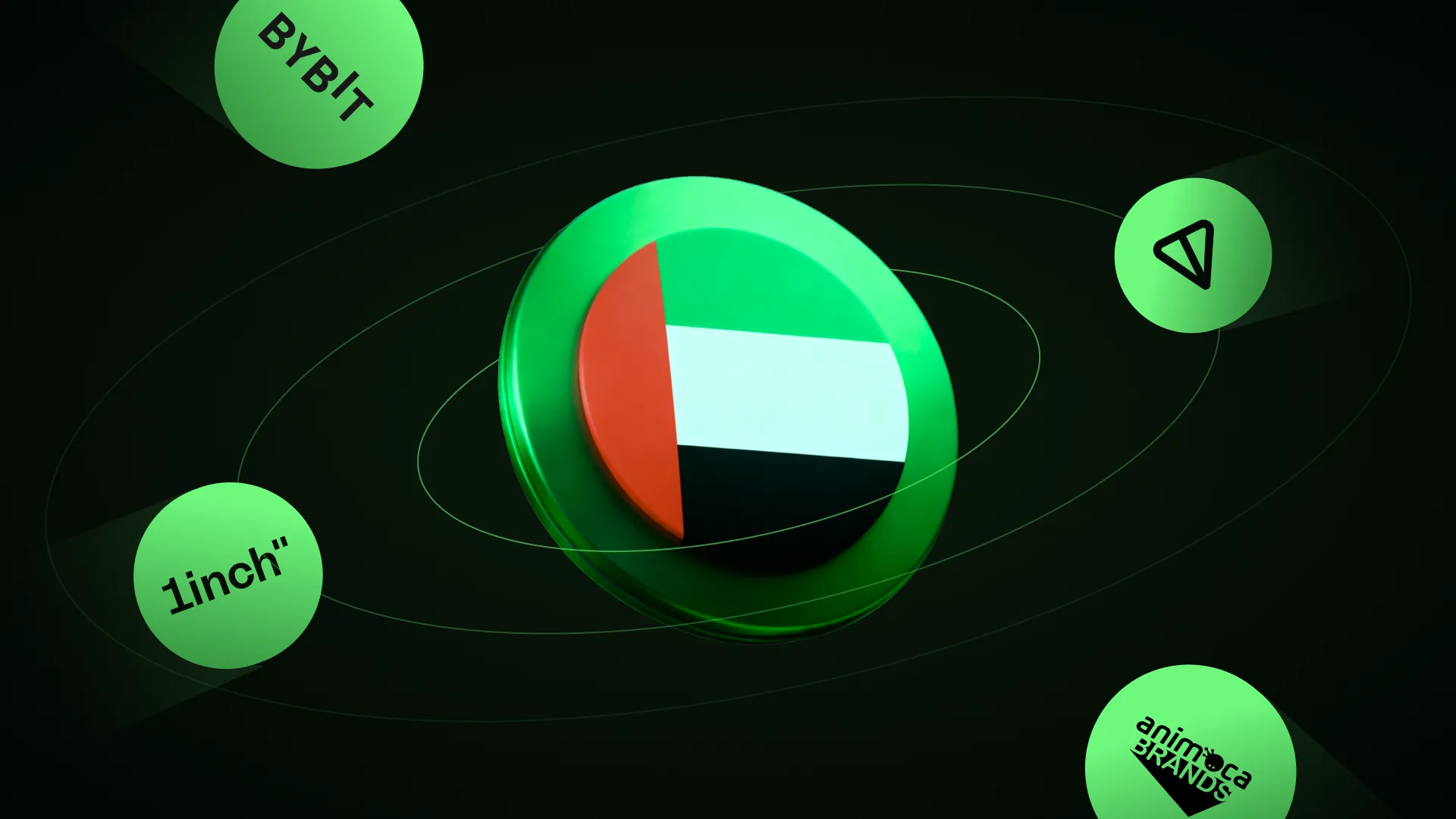
DMCC Crypto Centre hosts 700+ crypto and blockchain companies across more than 15 license categories, with fully digital setup and licenses from AED 34,000. The cluster includes Animoca Brands, Bitcoin.com, and Bybit, all of which established their first regional offices here. The Crypto Tower, a 17-storey dedicated blockchain and AI building in JLT, is currently under construction and expected to open in 2027.
DIFC Innovation Hub is the largest startup and innovation community in the MEASA region, home to more than 1,670 growth-stage tech firms including Web3, AI, and fintech companies. The Innovation License costs USD 1,500 per year, includes coworking space, up to four subsidised visas, and access to accelerator programmes and VC networks within the financial district. It operates under English common law with 100% foreign ownership.
Dubai Fintech District is a purpose-built business park for Web3 and fintech startups, developed by Gulf Alternatives. The campus features 65 units: 50 ground-level loft office spaces and 15 retail and F&B venues, arranged around a tree-lined pedestrian promenade with natural light, walkability, and greenery throughout. Each unit has drive-up access, customisable natural light including skylights, and flexible layouts.
The district sits minutes from the Burj Al Arab, Dubai Hills, and Emirates Hills. For companies relocating to the UAE, StatGlobal can assist with company setup, visa processing, and Golden Visa eligibility guidance.
Dubai Internet City is one of the largest tech free zones in the region, home to a broad base of software development, SaaS, and digital services companies. It offers a wide technical talent pool and established infrastructure, making it a practical option for blockchain companies with significant engineering operations who do not require a crypto-specific licensing environment.
Dubai's appeal for Web3 companies goes beyond just the tax efficiency. It combines clear regulatory frameworks, a good concentration of available capital, and multiple free zone options, giving Web3 founders a choice in where to set up.
For teams considering the move, the practical path is well-defined: obtaining trade license, VARA license (if needed), employee visas, and opening a corporate banking account. The groundwork has been laid. The question for most founders is no longer whether Dubai makes sense, instead it is how quickly they can get there.
CoinTerminal is the industry's only open-access launchpad connecting Web3 founders with a global community of 650,000+ investors.
Raise up to $1,000,000 and launch your project with an edge - apply for IDO in under 3 minutes.
This article is for educational purposes only. It is a general guide for founders and users navigating the Web3 space. It does not constitute financial advice. Always do your own research before making any investment decisions.If you want to learn more about raising funds or which IDOs to look into, our team is here to help. Feel free to reach out to us on Telegram at any time.